
How to Set Up a Home Office in a Small Apartment
How to Set Up a Home Office in a Small Apartment
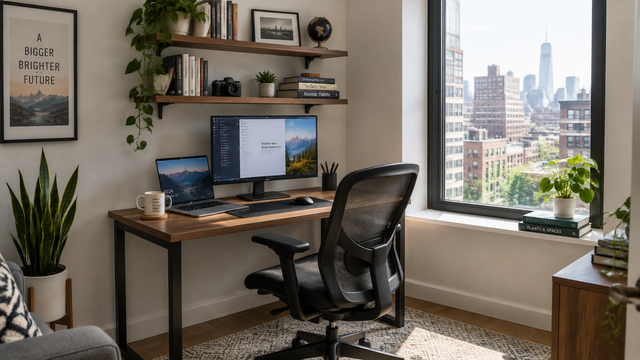
Working from home has become a popular lifestyle for remote employees, freelancers, entrepreneurs, and digital professionals across the United States. But what if you live in a small apartment without a dedicated office room?
The good news is that you don't need an entire room to create a productive workspace. With smart furniture choices, creative storage solutions, and proper organization, you can transform a small corner of your apartment into a comfortable home office.
Whether you're working from a bedroom, living room, or studio apartment, this guide will show you how to create a functional workspace without sacrificing your living space.
Key Takeaways
Choose an unused corner or quiet area for your workspace.
Invest in a compact desk and comfortable ergonomic chair.
Use vertical storage to maximize limited space.
Improve your setup with a laptop stand, external keyboard, and mouse.
Use natural light and proper desk lighting.
Organize cables to keep your apartment clutter-free.
Consider foldable furniture for a flexible workspace.
Create a clear separation between work and personal life.
1. Choose the Right Location for Your Home Office
The first step is finding the best location for your workspace.
You don't necessarily need a separate room. A small corner in your bedroom, living room, or even an unused wall can become a practical home office.
Consider these locations:
Bedroom Corner
A bedroom corner is an excellent option if your apartment doesn't have much extra space. Place a compact desk against an available wall and add a small shelf above it.
Living Room Workspace
If your living room has an unused corner, consider placing a narrow desk there. A small room divider or bookshelf can help visually separate your workspace from your relaxation area.
Closet Office (Cloffice)
An unused closet can become a compact workstation. Remove unnecessary items, install a small desk or shelf, and add suitable lighting.
Make sure the area has enough ventilation, comfortable seating space, and access to electrical outlets.
Pro Tip: Measure your available floor space before purchasing furniture. This helps prevent buying a desk that blocks doors, walkways, or storage areas.
2. Choose a Space-Saving Desk
Your desk is one of the most important pieces of furniture in a small home office.
Instead of purchasing a large executive desk, look for compact furniture designed for apartments.
Here are some useful options:
Wall-Mounted Desk: Great for saving floor space.
Folding Desk: Can be folded away when you're finished working.
Writing Desk: A simple, narrow desk for laptops and basic office supplies.
Corner Desk: Makes use of otherwise unused corners.
Ladder Desk: Combines a compact workstation with vertical shelving.
A desk approximately 30–40 inches wide can work for a basic laptop setup, depending on your equipment and available space.
Before buying, check desk depth, legroom, stability, and the height needed for comfortable typing.
3. Invest in a Comfortable Ergonomic Chair
A small apartment doesn't mean you should compromise on seating comfort.
If you work remotely for several hours daily, choose an office chair that provides appropriate back support and allows you to adjust the seat height.
Important features include:
Adjustable seat height.
Lumbar support.
Comfortable seat cushioning.
Adjustable armrests, if possible.
A backrest that supports your sitting position.
Wheels suitable for your flooring.
If space is limited, consider a compact task chair that can slide underneath your desk when not in use.
Avoid choosing a chair based on appearance alone. Its dimensions and adjustability should match your body and workstation.
4. Use Vertical Storage to Maximize Space
When floor space is limited, think vertically.
Wall-mounted storage can help keep your desk organized without taking up valuable floor space.
Consider adding:
Floating shelves.
Wall-mounted organizers.
Pegboards.
Small file holders.
Hanging baskets.
Vertical book racks.
Use shelves for notebooks, office supplies, books, and decorative items.
A pegboard can also provide a convenient place to organize headphones, cables, scissors, and other frequently used accessories.
Pro Tip: Keep frequently used items within easy reach. Store less frequently used supplies on higher shelves.
For renters, removable adhesive organizers and freestanding shelves can be useful alternatives to drilling into walls. Always follow product weight limits and your lease requirements.
5. Improve Your Lighting and Workspace Environment
Good lighting can make a small apartment office more comfortable and practical.
Whenever possible, position your desk near a window to benefit from natural daylight.
However, avoid placing your monitor directly in front of a bright window if it creates glare.
Consider these lighting options:
Adjustable LED desk lamp.
Soft ambient room lighting.
Monitor light bar.
Natural daylight from a nearby window.
Video-call lighting positioned in front of you.
Choose a desk lamp with adjustable brightness so you can adapt the lighting throughout the day.
Also, keep your workspace ventilated and maintain a comfortable room temperature.
6. Create an Ergonomic Laptop and Monitor Setup
Working directly from a laptop for extended periods can encourage uncomfortable neck and wrist positions.
Fortunately, a few inexpensive accessories can improve your workstation.
Essential accessories:
Laptop stand to raise the screen.
External keyboard for comfortable typing.
External mouse for better positioning.
Monitor stand or adjustable monitor arm.
Footrest if your feet cannot rest comfortably on the floor.
Position your screen approximately an arm's length away, with the top of the display at or slightly below eye level.
Keep your shoulders relaxed, elbows close to your body, and wrists as straight as possible.
The US Occupational Safety and Health Administration (OSHA) provides additional guidance on arranging computer workstations.
7. Organize Cables and Electrical Accessories
Loose cables can make a small apartment workspace look messy and create tripping hazards.
A simple cable management system can make a noticeable difference.
Try these solutions:
Adhesive cable clips.
Under-desk cable trays.
Cable sleeves.
Velcro cable ties.
A properly rated power strip.
Cable labels for identifying chargers.
Keep electrical connections accessible and avoid overloading outlets or power strips.
Route cables away from walking paths, especially if your desk is located in a shared living area.
8. Make Your Home Office Look Bigger
A well-designed small workspace can feel more open and organized with a few simple decorating techniques.
Use Light Colors
White, beige, light gray, and natural wood finishes can create a clean visual appearance.
Add a Mirror
A strategically placed mirror can help reflect natural light and make a small room feel more spacious.
Choose Minimalist Furniture
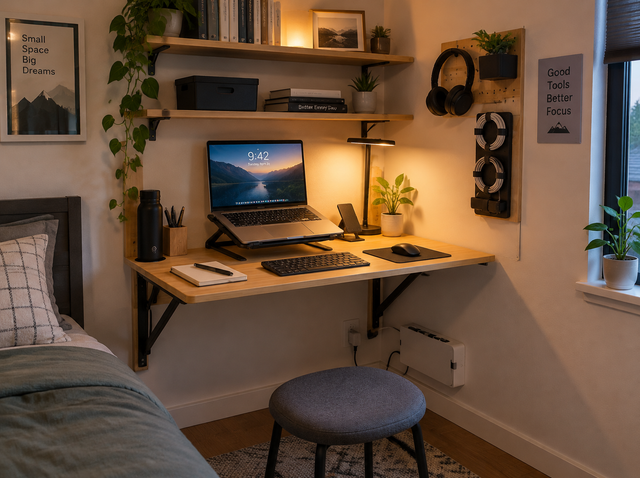
Avoid bulky furniture and unnecessary decorations. Select pieces that serve a practical purpose.
Add a Small Indoor Plant
A small desk plant can add personality and freshness without requiring much space.
Remember, the goal is to create a workspace that feels comfortable rather than crowded.
9. Set Up a Work-Life Separation System
One challenge of working from a small apartment is separating professional responsibilities from personal activities.
When your office is also part of your bedroom or living room, establishing a routine becomes especially important.
Try these habits:
Start and finish work at consistent times.
Keep work-related items in one designated area.
Put away your laptop and accessories after work.
Use a folding desk if you need to reclaim space.
Take regular breaks away from your workstation.
Avoid working from your bed whenever possible.
A simple daily routine can help make your apartment feel like both a comfortable home and a productive workplace.
10. Budget-Friendly Small Apartment Home Office Setup
You don't need expensive furniture to build a functional home office.
Here is an example of a basic US budget:
| Item | Estimated Budget |
|---|---|
| Compact desk | $40–$90 |
| Ergonomic task chair | $70–$130 |
| Laptop stand | $15–$30 |
| External keyboard and mouse | $20–$40 |
| LED desk lamp | $15–$25 |
| Cable organizers | $5–$15 |
| Small storage organizer | $10–$25 |
| Estimated Total | $175–$355 |
These are illustrative shopping budgets, not verified live retailer prices. Actual costs depend on the brand, retailer, sales, and product specifications.
If your budget is limited, prioritize a suitable chair, desk, and comfortable laptop setup before purchasing decorative accessories.
Frequently Asked Questions (FAQs)
1. How much space do I need for a small home office?
You can create a basic workstation in a relatively small corner. The exact space depends on your desk, chair, equipment, and required walking clearance.
2. What is the best desk for a small apartment?
A folding desk, wall-mounted desk, narrow writing desk, or compact corner desk can be excellent options.
3. How can I create a home office in a bedroom?
Choose an unused bedroom corner, position a compact desk against a wall, and use vertical shelves to save floor space. Keep the desk separate from your sleeping area as much as possible.
4. How can I make a small home office look bigger?
Use light colors, minimalist furniture, mirrors, vertical storage, and good lighting. Keep unnecessary items off your desk.
5. Is an ergonomic chair necessary for working from home?
A suitable chair with back support and adjustable height can make prolonged desk work more comfortable. Choose one that fits your body and workstation.
6. How much does a small apartment home office cost?
A basic setup might cost approximately $175–$355 using budget-friendly furniture and accessories. Premium furniture and additional monitors can increase the total.
Final Thoughts
Setting up a home office in a small apartment is all about using your available space wisely. You don't need a dedicated office room or expensive furniture to create a productive environment.
Start with a suitable location, choose compact furniture, improve your lighting, and organize your workspace with practical storage solutions.
Most importantly, prioritize comfort and functionality over decoration.
With a little planning, even a small apartment corner can become a productive home office for remote work, freelancing, studying, or running an online business.


No comments